Updated
Sep 03, 2026
Updated
Sep 03, 2026
 3 min read
 Checked regularly
Any of these four does the job; the differences are habits, not compatibility.
- MetaMask: the default choice, Arbitrum works with no setup. Our guide covers receiving and transfers.
- Trust Wallet: the mobile-first option, same out-of-the-box support.
- Rabby: for active DeFi users, shows what a transaction will do before you sign it, and supports 68+ networks on one address. It is the wallet we use in the example below.
- Ledger: cold storage for serious amounts; pairs with MetaMask or Rabby as the interface, keys stay offline.
Pick by how you use crypto: phone-first — Trust Wallet, browser and dApps — MetaMask or Rabby, long-term size — Ledger behind one of them.
Why Not Keep ARB on an Exchange
An exchange balance is the exchange's promise, not your coins. FTX made that lesson famous, BitMart's shutdown repeated it, and several more platforms closed or lost markets in 2026 under regulators' pressure. None of this threatens coins in a self-custody wallet: they live on-chain, only your keys control them, and no bankruptcy filing reaches either. Keep the trading float on the exchange, keep the position in your wallet.
How to Transfer ARB From an Exchange to a Wallet
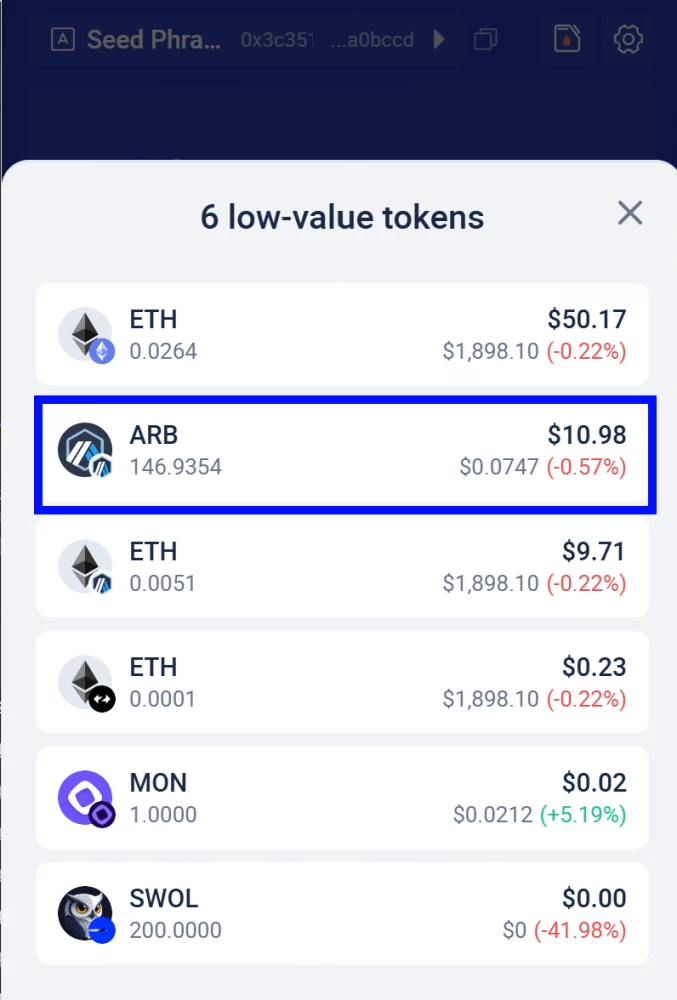
The rule from all our transfer guides: the network is dictated by the sender. ARB lives natively on Arbitrum One and also as an ERC-20 token on Ethereum, and exchanges usually offer both routes. The OKX withdrawal screen makes the choice obvious: the same ARB withdrawal costs 0.82 ARB over Ethereum and 0.034 ARB over Arbitrum One, a 24x gap. That gap is the whole point of L2s: same token, same destination address, a fraction of the cost. We ran the real test from OKX to Rabby over Arbitrum One.
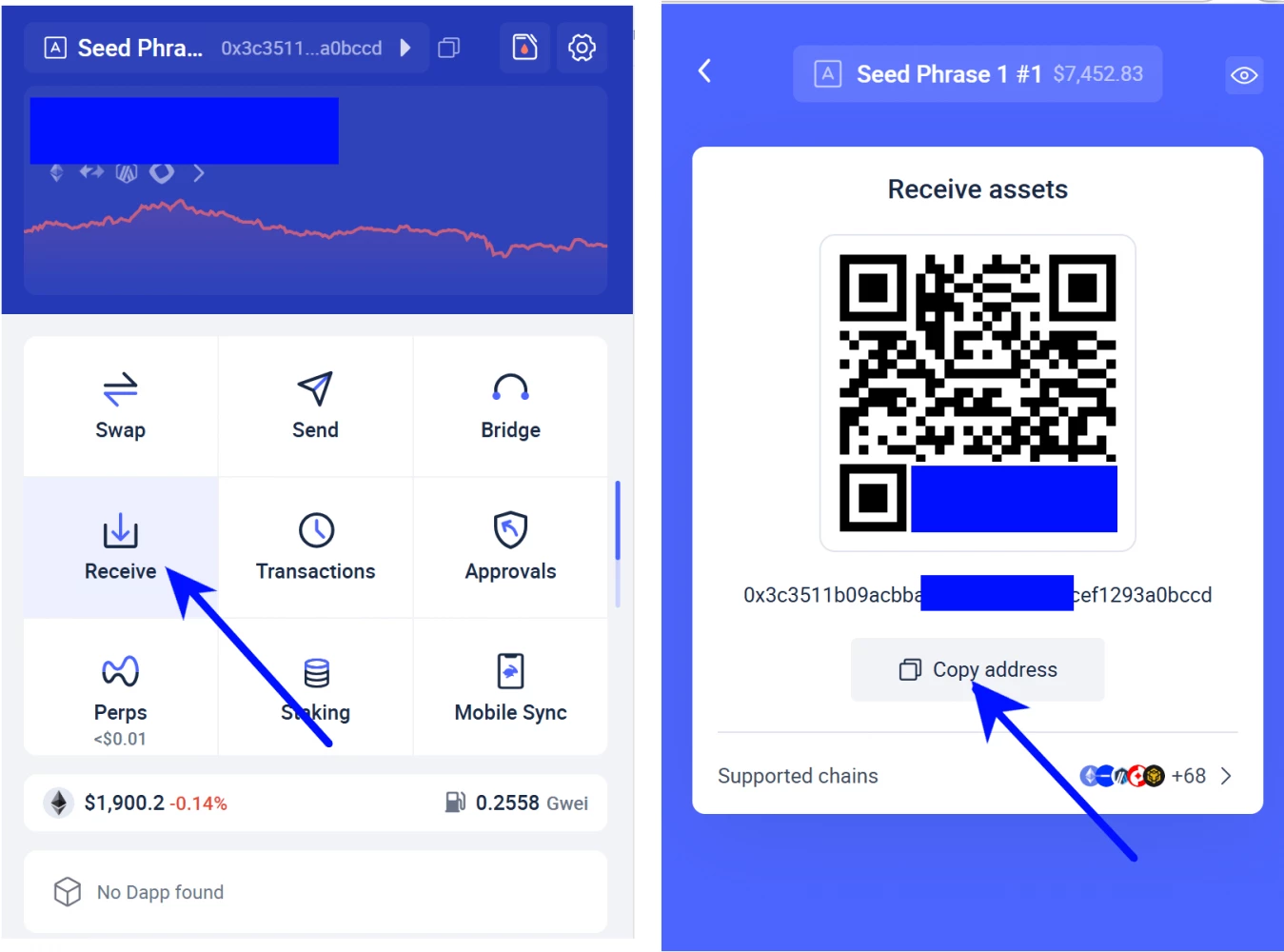
- In Rabby, click "Receive". The wallet shows your QR code and 0x address, one for all EVM networks; the "Supported chains" line below lists 68+ of them, and Arbitrum One is on the list, so nothing extra to configure.
- Click "Copy address".
- On OKX, open "Funding" → "Withdrawal", pick ARB.
- On the "On-chain addresses" tab pick the network: the dropdown shows both routes with live fees. Choose "Arbitrum One".
- Paste the address, enter the amount and click "Next", then pass your usual security check.
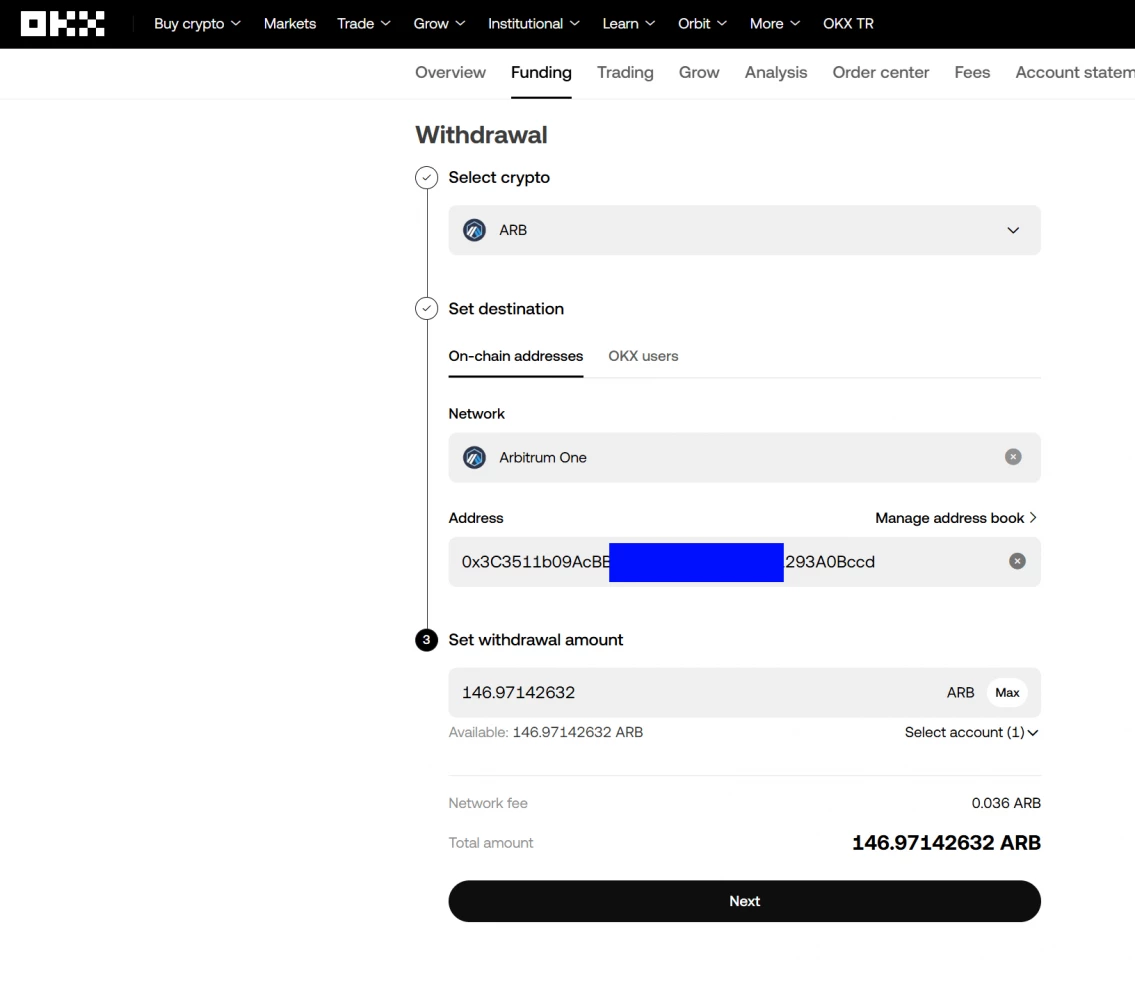
In our test the network fee came to 0.036 ARB, roughly a quarter of a cent, and the remaining 146.94 ARB landed in the wallet. Fees are dynamic: the withdrawal window shows the current number before you confirm. And the two habits that cost nothing: verify the first and last characters of the pasted address, and send a test amount first when the sum is serious.